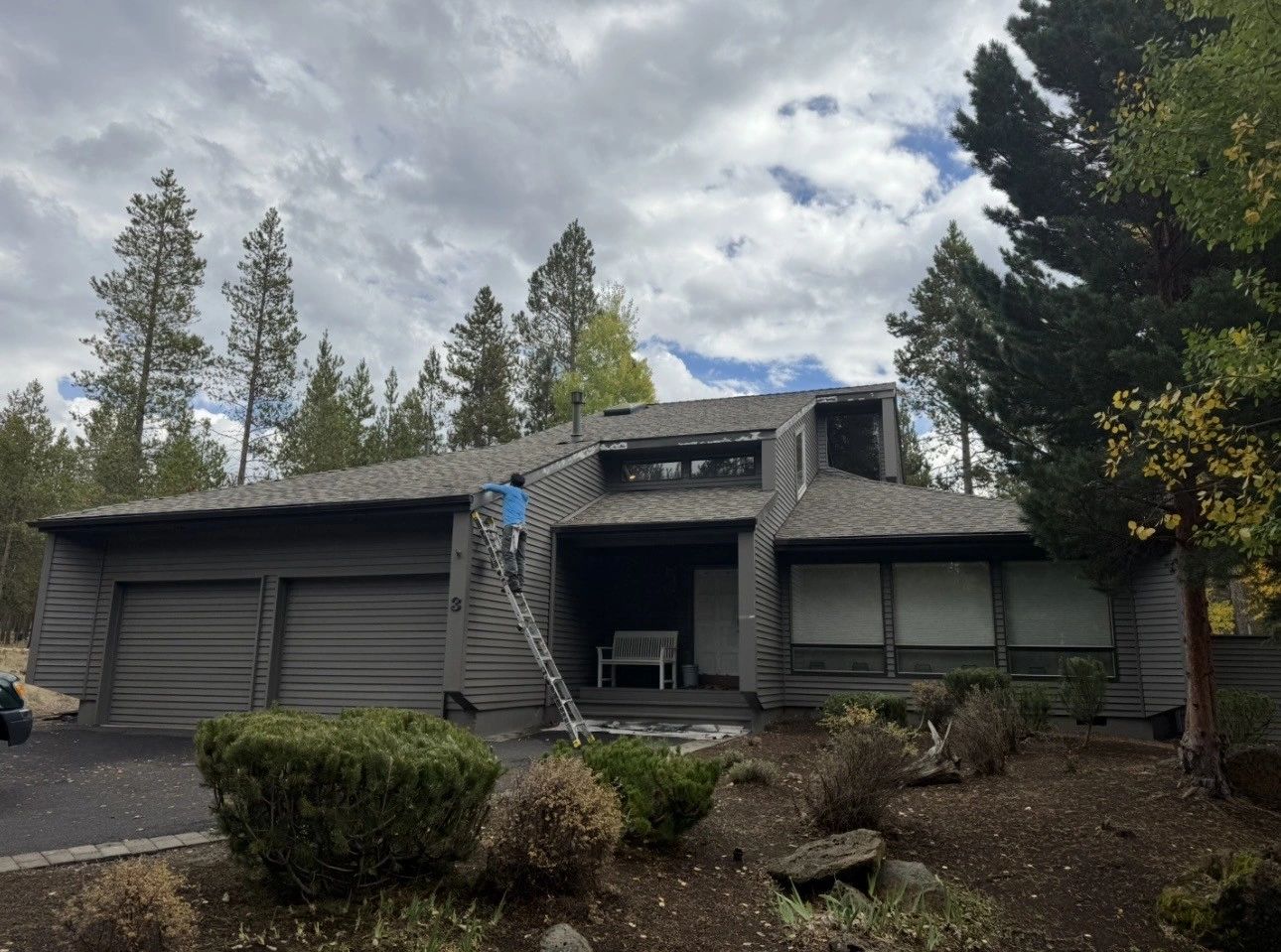
Ladder against a two story home during a siding repair and repaint by Elite Construction Contracting near Bend, Oregon

Siding Guide / Bend, Oregon

Siding Repair or Replacement: How to Tell What Your Bend Home Needs

A lot of homeowners who call us about new siding only need a repair and a coat of paint. Others have been patching a wall that should have been replaced years ago. Here is how to tell which one you are, and what moves the cost.

  • Oregon CCB #209888
  • Licensed, bonded and insured since 2016
  • 5.0 Google rating from 10 reviews
  • BBB A+ accredited since 2017

The Short Answer / 01

Should You Repair or Replace Your Siding?

Repair your siding when the damage is limited to one or two walls and the sheathing behind it is still dry and solid. Replace it when boards are swollen, cracked or rotting on most walls, when the sheathing is soft, or when it has been patched so often that the next repair will not hold. Most houses fall into one of these three jobs.

01

Repair and repaint

Damage in a few places

A handful of bad boards, usually in the bottom rows, under windows or on the sunny side. We replace them, fix the trim, caulk and flashing that let the water in, and paint the whole wall so the patch does not show. This is the least expensive job of the three.

02

Partial reside

One or two walls are done

The south or west wall is worn out while the rest of the house still has years left. We strip that wall to the sheathing, repair it, and install new siding that matches the rest. It costs more than a repair and far less than doing the whole house.

03

Full reside

The siding has reached the end

Failure on most walls, soft sheathing, or a product that is coming apart. All of it comes off, the walls get a new weather barrier and flashing, and new siding and trim go on. It is the biggest job, and the only one that resets the clock on the whole exterior.

Check It Yourself / 02

A Ten Minute Siding Check You Can Do Before You Call

Walk around the house with a screwdriver. Start with the south and west walls, because the sun wears those first.

  • Press on the bottom rows. Push a thumb or the screwdriver into the lowest boards and the bottom edges of panels. Sound siding is hard. If it gives or flakes, water has been getting in.
  • Look at the bottom edges. Edges that are swollen, fuzzy or separating into layers mean the board has been soaking up water.
  • Check the joints. Caulk that has cracked or pulled away where boards meet each other, the trim and the windows is an open door for water.
  • Rub the paint. A chalky film on your hand means the paint is worn out. Peeling that keeps coming back in the same spot means moisture behind it.
  • Look under windows and where a roof meets a wall. Dark streaks or soft trim there point to a flashing problem, not just a siding problem.
  • Look at the ground. Soil, bark or a sprinkler head against the bottom of the wall keeps the siding wet all summer.
  • Check inside. A stain, a musty smell or bubbling paint on the inside of an exterior wall means water is already through.

Count the walls, not the boards. A few bad spots on one wall is a repair. The same problem showing up on three or four walls is the siding telling you it is at the end of its life.

Three cheap habits that make siding last: aim sprinklers away from the house, keep soil and bark at least six inches below the bottom of the siding, and recaulk the joints on the sunny walls every few years.
Reading the Signs / 03

Signs a Siding Repair Is Enough, and Signs It Is Time to Replace

A repair will usually do

Keep the siding you have

  • Damage is on one or two walls
  • Bad boards are mostly in the bottom rows or around a few windows
  • The wall feels solid when you press on it
  • The paint is faded or chalky but the boards under it are hard
  • The problem traces back to one cause, like a sprinkler, a missing flashing or failed caulk
  • The siding profile is still made, so new boards will match

Replacement makes more sense

Stop patching

  • Swelling, cracking or rot shows up on most walls
  • The sheathing behind the siding is soft or stained
  • Panels are coming apart in layers along the bottom and the seams
  • The same areas have been patched and repainted more than once
  • Boards are warped or pulling away from the wall
  • There is no weather barrier behind the siding, which we sometimes find on older homes

By Material / 04

How Each Type of Siding Fails in Central Oregon

What is on your walls changes the answer. Some siding takes repairs well. Some does not.

Fiber cement

Usually repairable

It does not rot, so problems are cracked pieces, failed caulk and worn paint. Cracked boards can be replaced one at a time and the wall repainted. Replacement only comes up when the flashing was done wrong across the house and the sheathing behind it has been getting wet.

Engineered wood

Repairable if caught early

It fails at bottom edges, unsealed cut ends and butt joints, where water gets into the wood fibers and the board swells. Swollen boards have to be replaced, because they do not shrink back. A few rows is a repair. Swelling on every wall is a reside.

Plywood panel siding

Often the replacement case

T1-11 and similar panels soak up water at the bottom edge and the horizontal seams, then separate into layers. A few bad panels can be swapped. When the damage runs along most of the house, a full reside over new house wrap usually costs less over time than patching it every few years.

Cedar and other wood

The most repairable

Wood can be replaced one board at a time and refinished many times. Boards that are gray and dry but still solid need stain, not replacement. Boards that are cupped, split through or soft need to come out. Wood siding is usually replaced only after years without a finish on it.

For what we install and how each material holds up when it is new, see our siding contractor page for Bend.

Cost / 05

What Drives the Cost of Siding Repair and Replacement in Bend

We do not publish square foot prices, because two houses the same size can be very different jobs. These are the things that move the number, and they are what we look at during the estimate.

  • How much wall is involved. One wall or the whole house, and how many stories. Second story work needs more staging and more time.
  • What is behind the siding. Dry, solid sheathing keeps a job simple. Rotted sheathing or framing has to be repaired before anything new goes on.
  • The material. Fiber cement, engineered wood, cedar and panel products are priced differently, and so is the labor to install each one.
  • Trim and flashing. Windows, doors, corners and roof to wall joints take more time than open wall. A house with a lot of them costs more to side.
  • Paint or stain. A repair is finished by painting at least the whole wall. A full repaint of the house is a bigger line.
  • Matching. A profile that is still made is simple. A discontinued one means finding the closest match and planning where the change falls.
  • The age of the house. Homes built before 1978 require lead safe work practices, which we are certified for.

The estimate is free and comes in writing after a site visit, so you are comparing real numbers for your house and not an average from somewhere else.

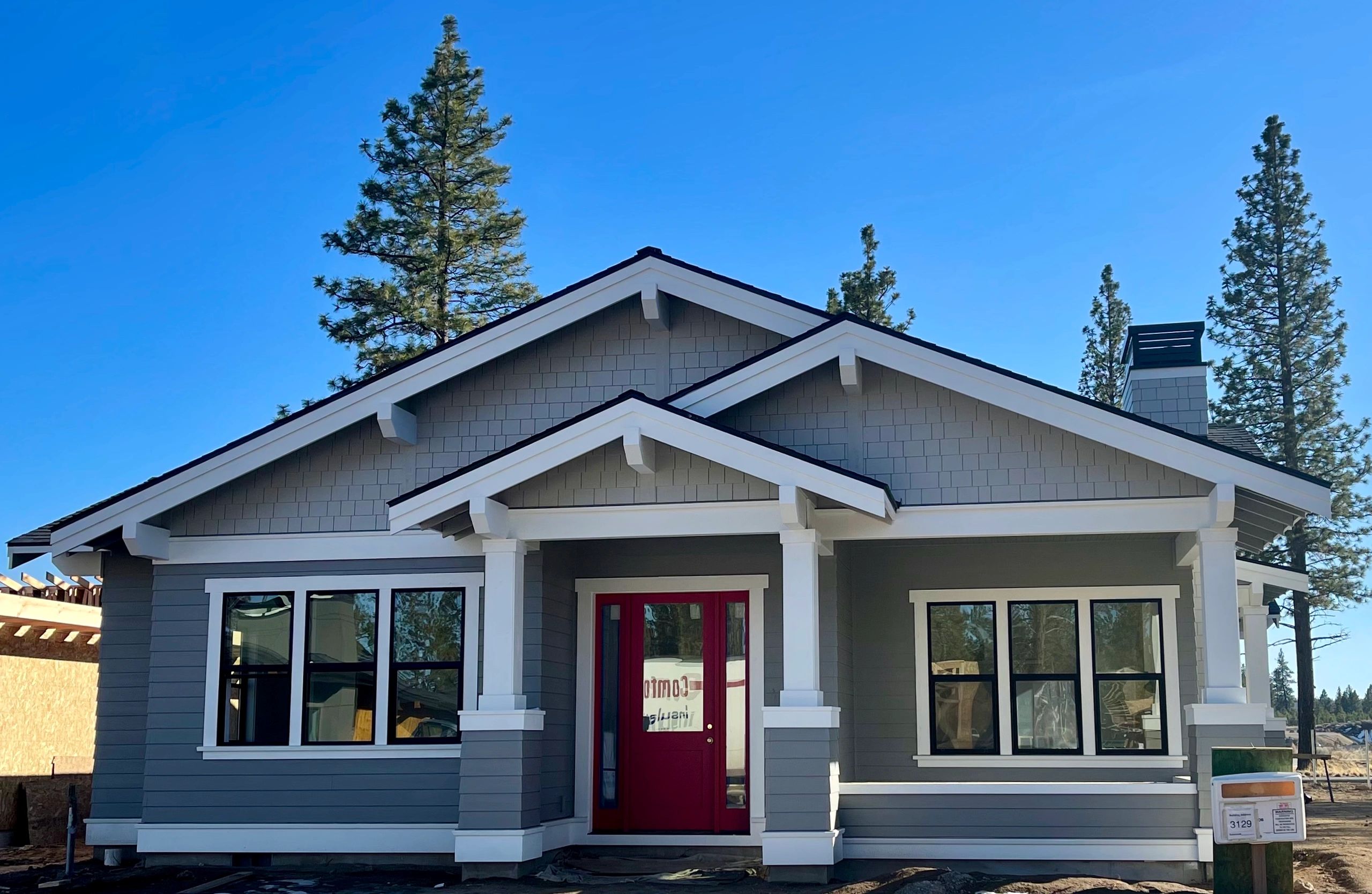
New lap siding and trim on a craftsman style home in Bend, Oregon installed by Elite Construction Contracting
New lap siding and trim on a Bend craftsman home.

Our Approach / 06

How We Make the Call on Your House

Owner Tim Treloggen does the estimate himself. He walks every wall, checks the trim and flashing, and if the answer is not clear from the outside he takes off a board or two in the worst spot to see the sheathing. You get photos of what he found along with the written recommendation and price.

We would rather tell you a repair will do than sell you a reside you do not need. A large share of our work is repair and repaint, including a siding repair and repaint on Newport Avenue in downtown Bend and an extensive one on Crater Lane in Sunriver. In Redmond, where wind and sprinklers do most of the damage, see siding repair and residing in Redmond. If the leak turns out to start at the roofline, the same crew handles roof repair and flashing.

FAQ / 07

Siding Repair and Replacement Questions

Can you replace the siding on just one wall?

Yes. Weather does not wear a house evenly, and it is common for the south or west wall to fail years before the others. We replace that wall, match the profile as closely as it can be matched, and paint it so it ties in with the rest of the house.

Is it worth repainting old siding instead of replacing it?

If the boards are solid, yes. Paint is what keeps water out of most siding, so a repaint with the failed boards, trim and caulk fixed first can add many years to a wall. If the boards are swollen, soft or coming apart in layers, paint will not hold and the money is better spent on new siding.

How do I know if there is rot behind my siding?

From outside, look for boards that feel soft, paint that keeps peeling in the same spot, dark stains under windows and trim that has pulled away from the wall. Inside, look for stains or a musty smell on the same wall. The only way to be sure is to take off a board in the worst spot and look, which we do during the estimate when the outside does not give a clear answer.

Can new siding be installed over the old siding?

We do not recommend it. Covering old siding hides whatever damage is behind it and leaves the old flashing and weather barrier in place, which is usually where the trouble started. Taking the old siding off lets us repair the sheathing and install new house wrap and flashing before the new siding goes on.

How much does siding repair cost compared with replacement?

A repair and repaint costs a fraction of a full reside, because most of the wall stays in place. How big that gap is depends on how many boards have failed, what is behind them and how much of the house needs paint afterward. We do not quote over the phone. The estimate is free and in writing after we see the house, and when both a repair and a reside are reasonable choices we will tell you so.

What happens if I put off a siding repair?

Siding damage does not hold still. Once water is getting behind the boards, it soaks the sheathing, and freeze and thaw opens the gap a little wider every winter. A job that is a few boards and some caulk this year can turn into sheathing and framing repair later.

Do I need a permit for siding repair in Bend?

Small repairs with the same material often do not need one. Structural repairs and replacing sheathing over large areas usually do. The City of Bend issues permits inside city limits, and Deschutes County does outside them. We confirm the requirements for your project before we quote.

Free Estimate / 08

Find Out Whether Your Siding Needs Repair or Replacement

Send us what you found on your walk around the house. Photos of the worst spots help the most.

  • Which walls have damage, and which way they face
  • What you see: swelling, cracks, soft spots, peeling paint
  • The kind of siding, if you know it
  • Roughly when the house was built

We reply within 48 hours on business days. Office hours are Monday to Friday, 7:00 am to 5:00 pm.

Prefer to talk? Call (541) 497-0123

Next Step

Still not sure whether it is a repair or a reside?

One site visit settles it. Call the office and talk to Tim, or use the request form above. The estimate is free and in writing.